The 7 Days Lemosho Route Kilimanjaro Climbing is one of the best options for travelers looking for a scenic and well-paced journey to the summit of Mount Kilimanjaro.
The Lemosho Route is known for its beautiful landscapes, diverse vegetation, and good acclimatization opportunities. The route begins on the western side of Mount Kilimanjaro and gradually crosses different climate zones before joining the southern circuit.
During this seven-day adventure, you will trek through rainforest, heath and moorland, alpine desert, and finally reach the Arctic conditions near Uhuru Peak at 5,895 metres.
With its longer approach and gradual ascent, the Lemosho Route is considered one of the most scenic routes for climbing Kilimanjaro.
Route Highlights
- Climb Mount Kilimanjaro via the scenic Lemosho Route.
- Trek through different vegetation zones.
- Enjoy beautiful views of the Shira Plateau.
- Pass through Lava Tower at approximately 4,630 metres.
- Follow the famous southern circuit.
- Experience the challenging Barranco Wall.
- Improve acclimatization with a gradual trekking schedule.
- Reach Uhuru Peak at 5,895 metres.
- Descend through the rainforest via the Mweka Route.
7 Days Lemosho Route Kilimanjaro Itinerary
Day 1: Londorossi Gate to Mti Mkubwa Camp
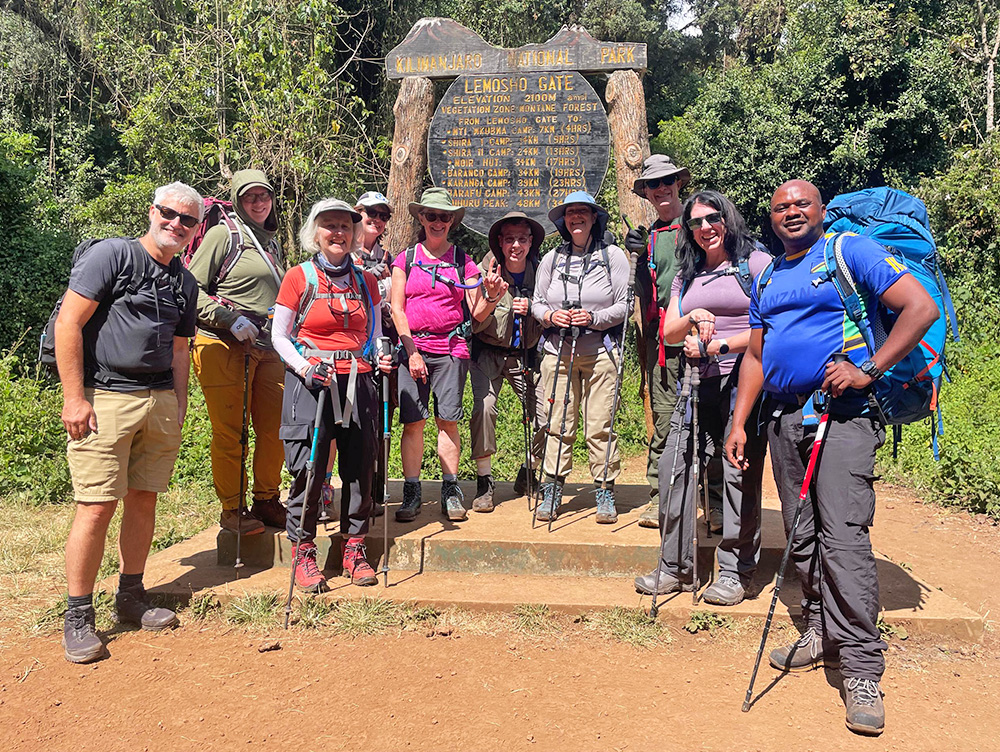
Your Kilimanjaro adventure begins with registration at Londorossi Gate before continuing to the Lemosho starting point.
After completing the necessary formalities, begin your trek through the rainforest. The forest is rich in vegetation and wildlife, and you may hear different birds and monkeys during the hike.
After several hours of trekking, arrive at Mti Mkubwa Camp.
Trekking Time: Approximately 3–4 hours
Elevation: Around 2,100 m to 2,650 m
Day 2: Mti Mkubwa Camp to Shira 1 Camp
After breakfast, leave the rainforest behind and begin climbing towards the Shira Plateau.
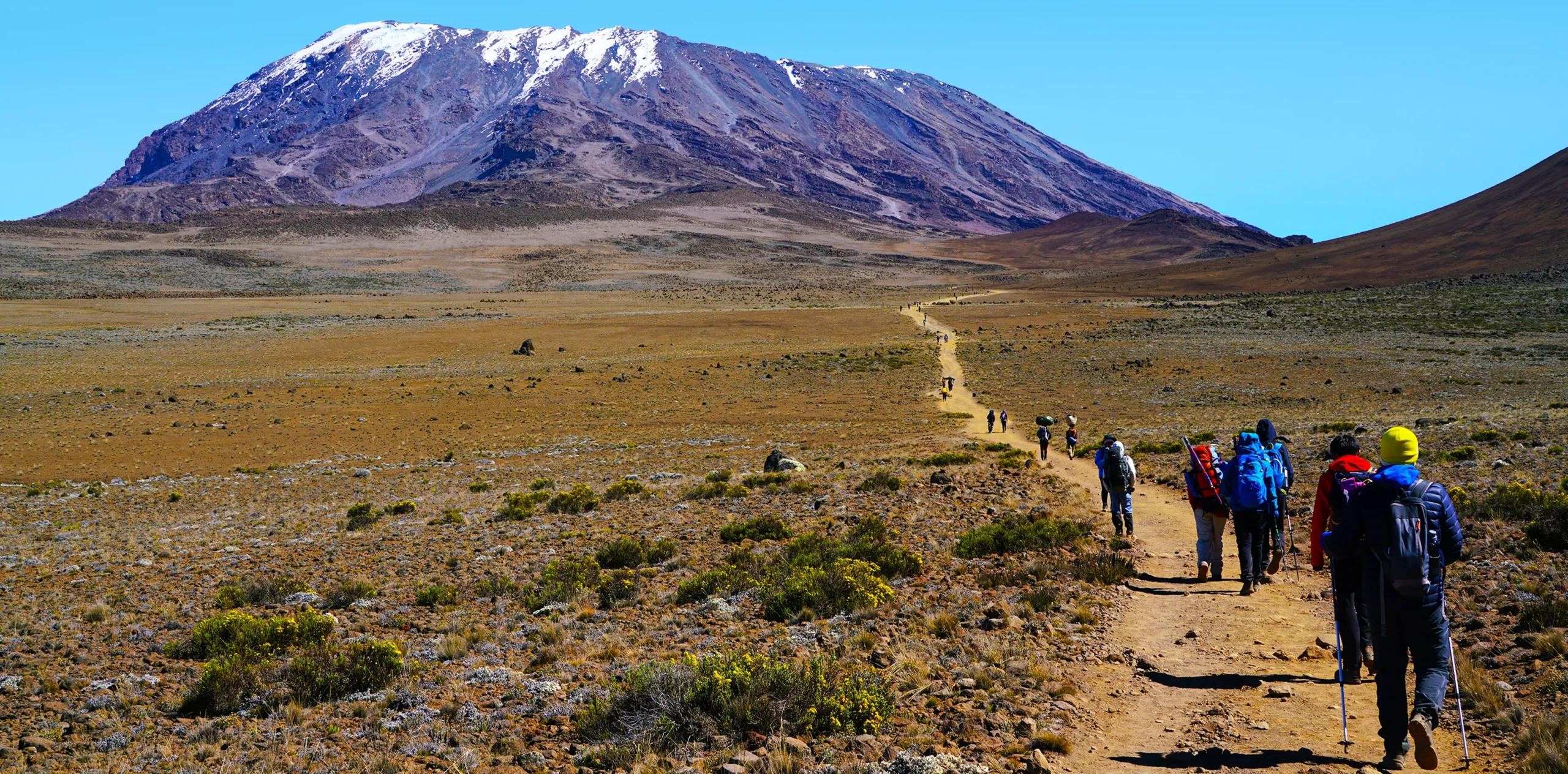
The vegetation gradually changes as you enter the moorland zone. The route offers impressive views of the surrounding landscape and Mount Kilimanjaro.
Arrive at Shira 1 Camp and rest for the night.
Trekking Time: Approximately 5–6 hours
Elevation: Around 2,650 m to 3,610 m
Day 3: Shira 1 Camp to Shira 2 Camp
Today’s trek is relatively gentle and allows your body to continue adjusting to the higher altitude.
You will walk across the beautiful Shira Plateau while enjoying views of the mountain and surrounding landscape.
Arrive at Shira 2 Camp for dinner and overnight.
Trekking Time: Approximately 3–4 hours
Elevation: Around 3,610 m to 3,850 m
Day 4: Shira 2 Camp to Barranco Camp via Lava Tower
This is an important acclimatization day.
You will trek towards Lava Tower before descending to Barranco Camp. Although you sleep at a lower altitude than Lava Tower, reaching the higher point helps your body adjust to the altitude.
After reaching Lava Tower, descend towards Barranco Camp.
Trekking Time: Approximately 6–8 hours
Highest Point: Lava Tower – approximately 4,630 m
Barranco Camp: Approximately 3,960 m
Day 5: Barranco Camp to Karanga Camp
After breakfast, begin the climb up the famous Barranco Wall.
Although it may look challenging, the climb is manageable with the support and guidance of your mountain crew.
After reaching the top, continue through the mountain landscape towards Karanga Camp.
Trekking Time: Approximately 4–5 hours
Elevation: Around 3,960 m to 4,035 m
Day 6: Karanga Camp to Barafu Camp
Today’s trek takes you to Barafu Camp, the final camp before the summit attempt.
The landscape becomes more rocky and cold as you approach the higher areas of Mount Kilimanjaro.
Arrive at Barafu Camp, rest, and prepare your equipment for the summit attempt later at night.
Trekking Time: Approximately 3–4 hours
Elevation: Around 4,035 m to 4,640 m
Day 7: Barafu Camp to Uhuru Peak – Descend to Mweka Camp
The summit day begins around midnight.
You will start the challenging climb towards Stella Point before continuing to Uhuru Peak, the highest point in Africa at 5,895 metres.
After celebrating your achievement and taking photographs, begin your descent towards Barafu Camp for a short rest before continuing to Mweka Camp.
This is the longest and most challenging day of the entire climb.
Summit: Uhuru Peak – 5,895 m
Trekking Time: Approximately 12–15 hours
Why Choose the Lemosho Route?
The Lemosho Route is popular because it offers a combination of beautiful scenery and a longer acclimatization period.
The route passes through several different landscapes, including rainforest, moorland, the Shira Plateau, rocky alpine areas, and the high-altitude summit zone.
The seven-day itinerary gives climbers more time on the mountain compared with shorter routes, helping the body gradually adjust to the increasing altitude.
Best Time to Climb Kilimanjaro via Lemosho Route
Mount Kilimanjaro can be climbed throughout the year, but the most popular climbing periods are generally during the drier months.
January to March: Cooler conditions with fewer climbers on some dates.
June to October: Generally dry conditions and popular trekking months.
December: Another popular period, especially around the holiday season.
Weather conditions can change quickly on Mount Kilimanjaro regardless of the season.
What to Pack for the 7 Days Lemosho Route
Important items for your Kilimanjaro climb include:
- Warm jacket and thermal clothing.
- Waterproof jacket and trousers.
- Good-quality hiking boots.
- Warm gloves and hat.
- Sleeping bag suitable for cold conditions.
- Headlamp and extra batteries.
- Sunglasses and sunscreen.
- Trekking poles.
- Personal medication.
- Water bottles or a hydration system.
Why Choose Focus Kill Adventures?
Focus Kill Adventures provides organized Mount Kilimanjaro climbing experiences with experienced mountain guides and a professional support team.
Our team helps climbers prepare for their journey and provides support throughout the route.
We focus on:
- Experienced mountain guides.
- Professional climbing support teams.
- Well-planned trekking schedules.
- Safety and altitude awareness.
- Organized camping arrangements.
- Support from the beginning of the climb to the final descent.
Frequently Asked Questions About the 7 Days Lemosho Route
How difficult is the 7 Days Lemosho Route?
The Lemosho Route is physically demanding because of the altitude and long trekking days, but the seven-day itinerary provides better acclimatization than shorter climbing schedules.
What is the success rate of the Lemosho Route?
The success rate depends on individual fitness, acclimatization, weather conditions, and the experience of the mountain support team. Taking more time on the mountain generally improves acclimatization opportunities.
Do I need previous climbing experience?
Technical climbing experience is not normally required, but good physical preparation and fitness are important.
How many hours do we trek each day?
Most trekking days take approximately 3 to 8 hours, while summit day can take approximately 12 to 15 hours.
What is the highest point on the route?
The highest point is Uhuru Peak at 5,895 metres, the highest point in Africa.
Where do climbers sleep?
Climbers sleep in mountain tents at designated camps along the route.
Is altitude sickness a concern?
Yes. Altitude can affect climbers at high elevations. Proper acclimatization, hydration, and following your guide’s advice are important during the climb.
Book Your 7 Days Lemosho Route Kilimanjaro Climbing
Take on the challenge of climbing Africa’s highest mountain through one of the most scenic Kilimanjaro routes.
The 7 Days Lemosho Route combines beautiful landscapes, gradual acclimatization, exciting mountain camps, and the unforgettable experience of reaching Uhuru Peak.
Plan your Mount Kilimanjaro adventure with Focus Kill Adventures and prepare for an incredible journey to the Roof of Africa.
Trip Highlights
- Gradual ascent reduces altitude sickness risk
- Gradual ascent reduces altitude sickness risk
- Stunning views of rainforest, moorland, and alpine desert
- Expert local guides and full support team